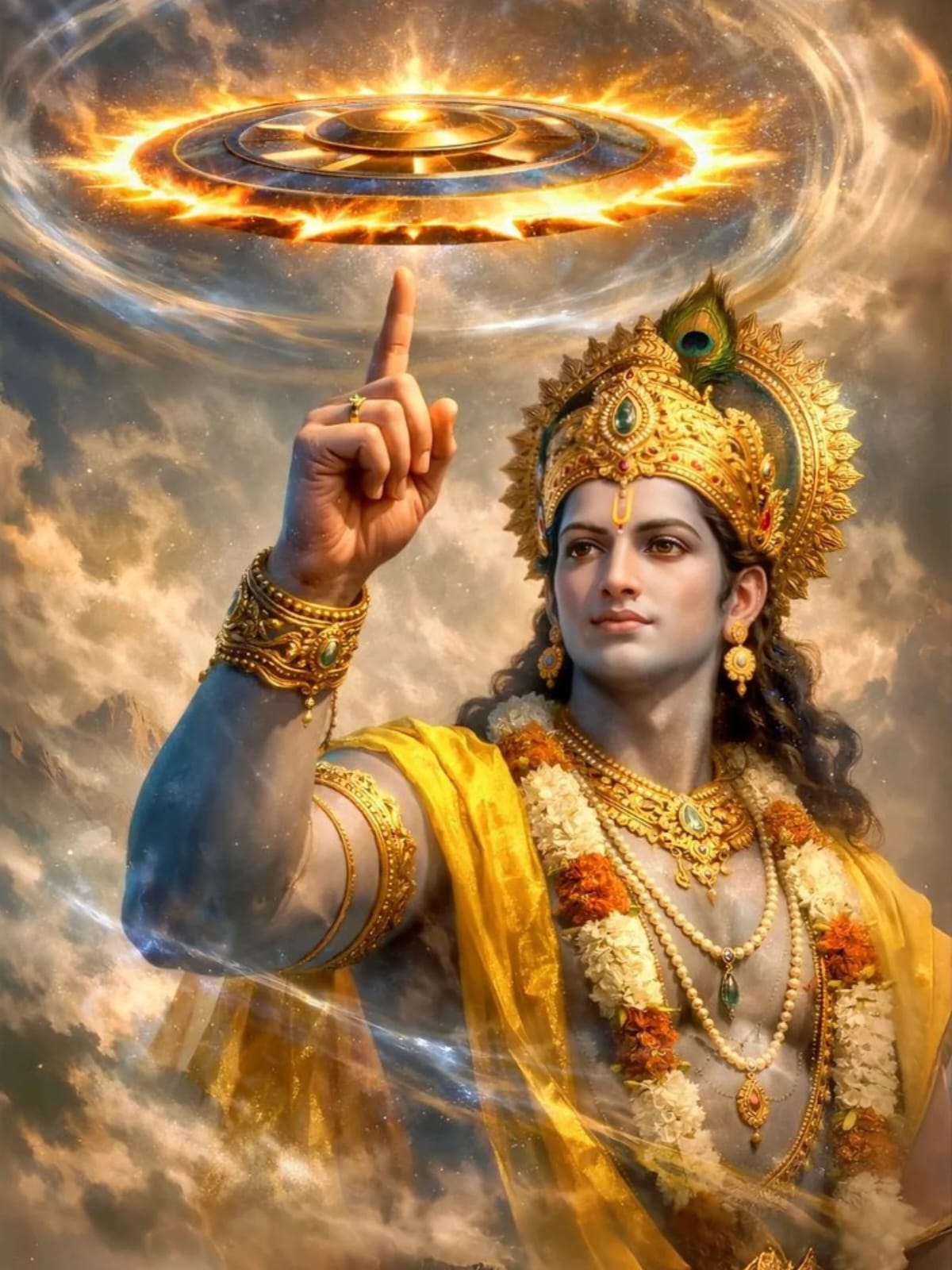
01. Universal Condemnation of Lust in Vedic Śāstras

01. Universal Condemnation of Lust in Vedic Śāstras
Why Every Authoritative Scripture Identifies Illicit Lust as the Supreme Enemy of the Soul
🌟 Introduction: The Unanimous Verdict of Śāstra
In the modern world, unrestricted sexual indulgence and romantic fixation are celebrated as the highest achievements of human freedom and personal happiness. Commercial advertisements, popular cinema, and worldly psychology constantly encourage the living entity to surrender unconditionally to sensual impulses.
However, when one opens the timeless pages of the Vedic literatures—the Śruti (the Upaniṣads), the Smṛti (codes of conduct like Manu-smṛti), the Itihāsas (Mahābhārata and Rāmāyaṇa), and the Purāṇas (Śrīmad-Bhāgavatam)—one encounters an uncompromising, diametrically opposed verdict. The sacred scriptures do not regard lust (kāma) as harmless recreation or innocent bodily fun. Rather, they unequivocally identify lust as the single most dangerous infection of consciousness, the supreme thief of spiritual wisdom, and the fatal trap of māyā that chains the eternal soul to repeated birth, old age, disease, and death (saṁsāra).
The Vedic tradition is not prudish or repressive; it is scientific and compassionate. Just as a physician firmly warns a patient that swallowing rat poison will destroy his physical organs, the Vedic ṛṣis and the Supreme Lord Himself firmly warn us that illicit sexual indulgence destroys the subtle fabric of spiritual intelligence (buddhi), suffocates divine memory, and drags the human being down into lower animalistic states of existence.
⚔️ Bhagavad-gītā: The Eternal Enemy and the Insatiable Fire
In the Bhagavad-gītā, Chapter 3, Verse 36, Arjuna asks the Supreme Lord Krishna a vital, universal psychological question that every sincere seeker eventually asks:
arjuna uvāca
atha kena prayukto 'yaṁ pāpaṁ carati pūruṣaḥ
anicchann api vārṣṇeya balād iva niyojitaḥ
"Arjuna said: O descendant of Vṛṣṇi, by what is one impelled to sinful acts, even unwillingly, as if engaged by force?"
Arjuna observes that even intelligent human beings, despite knowing what is right, are mysteriously overpowered and dragged into self-destructive, degrading actions. In response, Lord Krishna delivers the decisive verdict of the Vedic wisdom (Bhagavad-gītā, Chapter 3, Verses 37–39):
śrī-bhagavān uvāca
kāma eṣa krodha eṣa rajo-guṇa-samudbhavaḥ
mahāśano mahā-pāpmā viddhy enam iha vairiṇamāvṛtaṁ jñānam etena jñānino nitya-vairiṇā
kāma-rūpeṇa kaunteya duṣpūreṇānalena ca
Word-for-Word Meanings:
śrī-bhagavān uvāca — the Supreme Personality of Godhead said, kāmaḥ — lust, eṣaḥ — this, krodhaḥ — anger, eṣaḥ — this, rajaḥ-guṇa — the mode of passion, samudbhavaḥ — born of, mahā-aśanaḥ — all-devouring, mahā-pāpmā — greatly sinful, viddhi — know, enam — this, iha — in this world, vairiṇam — the greatest enemy, āvṛtam — covered, jñānam — knowledge, etena — by this, jñāninaḥ — of the knower, nitya-vairiṇā — by the eternal enemy, kāma-rūpeṇa — in the form of lust, kaunteya — O son of Kuntī, duṣpūreṇa — never to be satisfied, analena — by the fire, ca — also.
Translation:
"The Supreme Personality of Godhead said: It is lust only, Arjuna, which is born of contact with the material mode of passion and later transformed into wrath, and which is the all-devouring sinful enemy of this world... The wise living entity's pure consciousness is covered by his eternal enemy in the form of lust, which is never satisfied and which burns like fire."
Clinical Analysis of the Terms:
- Mahāśanaḥ (All-Devouring): The word aśana refers to eating. Lust has an infinite stomach. No matter how much sensory indulgence you feed it, it never burps and says, "Thank you, I am full." It demands more immediately.
- Mahā-pāpmā (Greatly Sinful): Lust is not a minor blemish; it is the parent of all sins. Lies, theft, betrayal, violence, and hypocrisy are all secondary crimes committed to satisfy or protect lust.
- Nitya-vairiṇā (The Eternal Enemy): Ordinary mundane enemies can be pacified through diplomacy, gifts, or distance. But lust lives inside your own mind and senses; it acts as a traitor inside the fortress, continuously scheming to pull you down.
- Duṣpūreṇa Analena (The Unquenchable Fire): Krishna compares lust to anala (fire). If a house is burning, you cannot extinguish the flames by pouring gallons of kerosene or clarified butter on them. Every time you surrender to a lustful urge, you pour fuel into the blaze.
👑 Śrīmad-Bhāgavatam: King Yayāti’s Thousand-Year Experiment
To prove that lust cannot be extinguished through indulgence, the Śrīmad-Bhāgavatam, Canto 9, Chapter 19 records the profound historical account of King Yayāti.
Through the curse of Śukrācārya, King Yayāti was suddenly struck with premature old age and decrepitude. Being intensely attached to sexual enjoyment with his queen Devayānī, he begged his youngest son, Pūru, to exchange his blooming youth for his father's decrepitude. Pūru dutifully agreed. King Yayāti received back the physical vitality of a young man and spent one full thousand years enjoying every imaginable sensual delight in palaces, celestial gardens, and fragrant forests.
Yet, after an entire millennium of unbroken sexual enjoyment, did King Yayāti find peace? Did his desires subside? His historic realization is immortalized in Śrīmad-Bhāgavatam, Canto 9, Chapter 19, Verse 14 (and also recorded in Manu-smṛti, Chapter 2, Verse 94):
na jātu kāmaḥ kāmānām upabhogena śāmyati
haviṣā kṛṣṇa-vartmeva bhūya evābhivardhate
Word-for-Word Meanings:
na — not, jātu — at any time, kāmaḥ — lust or lusty desire, kāmānām — of the objects of desire, upabhogena — by the enjoyment of, śāmyati — is pacified or mitigated, haviṣā — by clarified butter (ghee), kṛṣṇa-vartmā — fire, iva — like, bhūyaḥ — again and again, eva — certainly, abhivardhate — increases more and more.
Translation:
"Lusty desires can never be satisfied or brought to an end by enjoyment of the senses, just as fire can never be extinguished by pouring clarified butter upon the flames. Rather, the fire increases more and more."
King Yayāti frankly declared: "Even if one possessed all the grain, gold, cattle, and women on earth, it would still not be enough to satisfy the lust of a single human being. Therefore, a wise man should immediately renounce this fever."
🕸️ Lord Kapila's Diagnosis: The Net of Sensory Fascination
In Śrīmad-Bhāgavatam, Canto 3, Chapter 31, Verses 39–41, Lord Kapiladeva instructs His mother Devahūti on the exact mechanism of material bondage:
"The association of a woman or a man centered around bodily attraction is the greatest bondage for the soul. Just as a bird trapped in a hunter's net is brought under captivity, similarly, the living entity who becomes captivated by the attractive bodily form, sweet speech, and enchanting gestures of the opposite sex becomes entirely bound by the shackles of material existence."
Śāstra explains that the physical body is merely an assemblage of mucus, blood, bone, stool, and bile wrapped in a thin layer of skin. Maya places a magical enchantment upon this biological puppet so that the living entity imagines boundless nectar where there is only decay.
🎶 The Voices of the Ācāryas: Songs from the Sampradāyas
The realized spiritual teachers (Ācāryas) across the Vaishnava traditions did not speak of lust from dry academic curiosity. They experienced the ferocious storm of material nature and left behind poignant, heartfelt songs instructing us how to pray for divine rescue.
1. Śrīla Narottama Dāsa Ṭhākura (Prārthanā):
In his famous song Hari Hari Kṛpā Kari', the great Gaudiya master laments his helplessness before the onslaught of the lower modes:
hari hari! kṛpā kari’ rākha nija-pade
kāma krodha chaya jane, tare phire nānā sthāne,
chāṛite nā pāre dīna bhela
"O Lord Hari! Please be merciful and keep me sheltered at Your lotus feet! The six dacoits headed by lust (kāma) and anger (krodha) are relentlessly dragging me from one place to another. I am completely unable to escape their clutches, and I have become thoroughly impoverished and destitute!"
Śrīla Narottama Dāsa Ṭhākura describes the senses not as friendly companions, but as chaya jane—six ruthless dacoits who plunder the jewel of the soul's spiritual wealth while the sleeping soul looks on helplessly.
2. Śrīla Bhaktivinoda Ṭhākura (Kalyāṇa-kalpa-taru):
The pioneer of the modern Vaishnava renaissance writes with raw honesty about the agony of a mind contaminated by lust:
bhoga-vāñchā kari' ananta saṁsāre bhrami' bhrami' phiri hena
viṣaya-anale jvaliche hṛdaya, nāhi jāne śānti kena
"Driven by the burning thirst for material enjoyment, I have wandered through countless species in this endless material universe. My heart is constantly on fire in the blaze of sense gratification, and I do not know how to find even a drop of real peace!"
⚖️ The Essential Distinction: Kāma (Lust) vs. Prema (Love)
Modern culture systematically confuses lust with love. But Śrīla Kṛṣṇadāsa Kavirāja Gosvāmī reveals the clear philosophical dividing line in Śrī Caitanya-caritāmṛta, Ādi-līlā, Chapter 4, Verse 165:
ātmendriya-prīti-vāñchā — tāre bali ‘kāma’
kṛṣṇendriya-prīti-icchā dhare ‘prema’ nāma
- Kāma (Lust): The desire to gratify one's own senses, using another person or object as an instrument for selfish pleasure. Lust is exploitative, demanding, and terminating in anger and disgust.
- Prema (Pure Love): The pure desire to please the senses of the Supreme Lord Krishna (Hṛṣīkeśa), without any trace of selfish motivation. Love is sacrifice, eternal, and conferring boundless spiritual bliss.
Lust is simply love in a perverted, contaminated state—just as pure milk turns into sour curd upon contact with an acid agent. When our original spiritual affection for God is diverted toward mundane bodies, it turns into the destructive poison called lust.
🛡️ Practical Brahmacarya Protocol: Applying the Śāstric Verdict
- Adopt Śāstra-Cakṣu (See Through the Eyes of Scripture):
Whenever a sensual temptation flashes before you on a screen or on the street, immediately recite: "Mahāśano mahā-pāpmā viddhy enam iha vairiṇam" (This is the all-devouring, greatly sinful enemy). Do not romanticize the urge. See it as an intruder holding a loaded gun to your spiritual life. - Cease Pouring the Ghee:
Remember King Yayāti’s formula: indulgence never quiets desire. If an urge appears, refuse to give it "one small taste." Starve the flame of attention. A fire without wood or ghee dies out naturally. - Change the Master of the Senses:
The senses cannot remain inactive; they require engagement. Shift your hearing to transcendental topics (śravaṇam) and your tongue to chanting the Hare Krishna Maha-Mantra:Hare Krishna, Hare Krishna, Krishna Krishna, Hare Hare
Hare Rama, Hare Rama, Rama Rama, Hare Hare
Divine vibration re-tunes the consciousness from selfish exploitation back to joyful spiritual surrender.
🌟 Conclusion
All the Vedic scriptures speak with one roaring voice: Lust is not your friend, your nature, or your destiny. It is an unnatural, temporary covering over the soul. By hearing the uncompromising warnings of the Bhagavad-gītā, reflecting on the stark realization of King Yayāti in the Śrīmad-Bhāgavatam, and taking shelter of the prayers of the great Ācāryas, one gathers the philosophical fortitude to renounce the illusion of illicit desire and take the sacred path of Brahmacarya toward unshakeable divine peace.