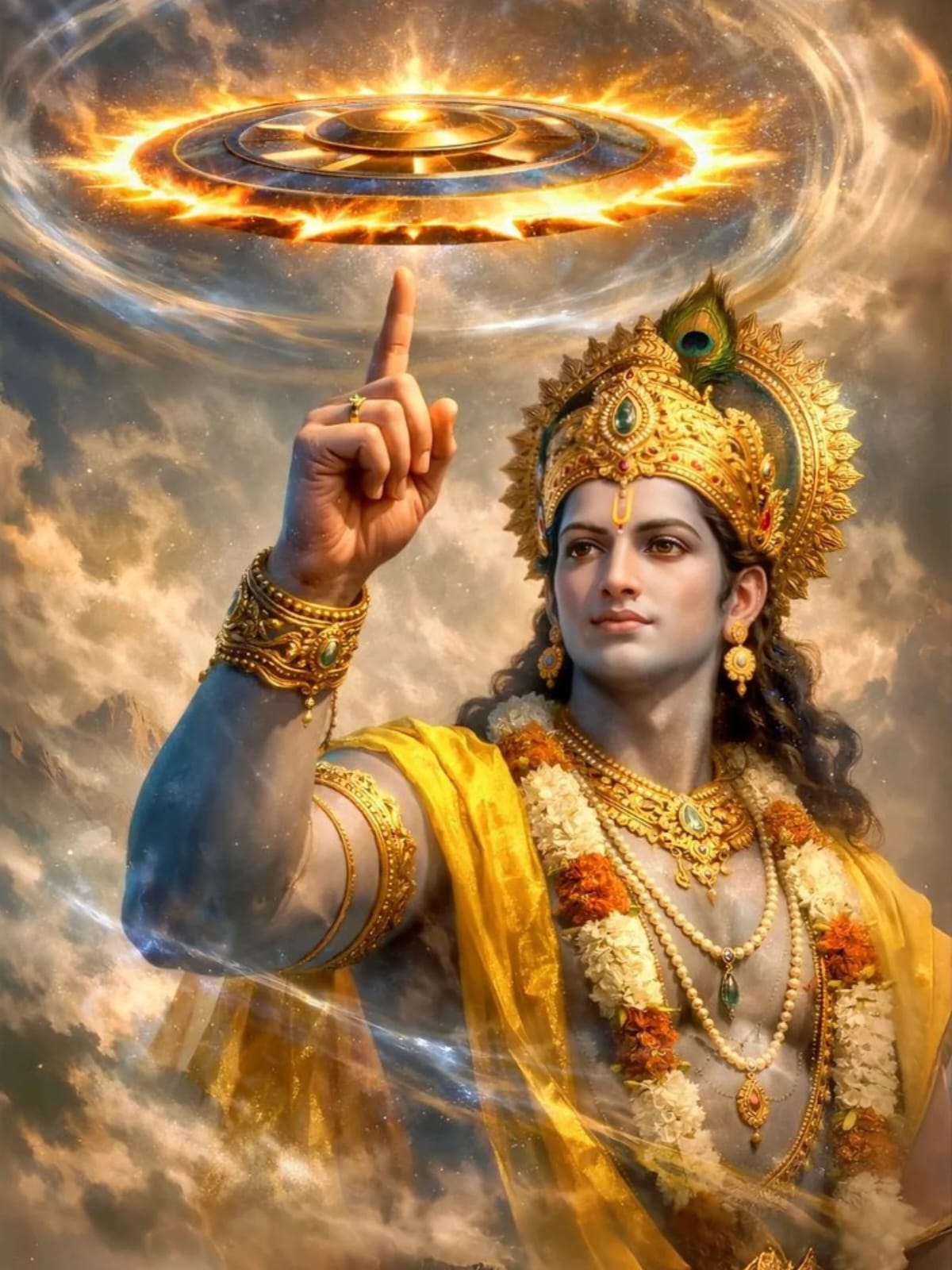
05. The First Tactical Step: Curbing the Senses at the Beginning (*Ādau Niyamya*)

05. The First Tactical Step: Curbing the Senses at the Beginning (Ādau Niyamya)
The Border-Control Strategy of the Bhagavad-gītā, the Upadeśāmṛta, and the Upaniṣads
🌟 Introduction: The Tactical Art of Spiritual Warfare
When a general prepares to defend his nation from an invading army, where does he deploy his strongest defenses? He does not wait until the enemy troops have breached the capital city, surrounded the parliament, and broken into his bedroom. He establishes heavily fortified outposts at the borders, controlling the bridges, mountain passes, and rivers. If the border is secure, the inner city remains in absolute peace.
In spiritual life, the "capital city" is the mind and the heart, while the "border checkpoints" are the external senses—the eyes, the ears, the tongue, the nose, and the skin.
Tragically, most struggling seekers fight the battle in reverse: they allow their eyes to roam freely on provocative billboards, social media reels, and sensual advertisements; they allow their tongues to consume overly stimulating foods; and then, when the volcanic fire of lust erupts inside their minds at night, they sit in despair and wonder: "Why am I so weak? Why cannot I control my mind?"
The Vedic scriptures teach that trying to calm the mind while leaving the senses unregulated is like pouring gasoline onto a bonfire while shouting at the flames to stop burning.
⚔️ Bhagavad-gītā 3.41: Krishna’s Strategic Command
In the Bhagavad-gītā, Chapter 3, Verse 41, after explaining the terrifying nature of lust, Lord Krishna issues a sharp, direct military directive to Arjuna:
tasmāt tvam indriyāṇy ādau niyāmya bharatarṣabha
pāpmānaṁ prajahi hy enaṁ jñāna-vijñāna-nāśanam
Word-for-Word Meanings:
tasmāt — therefore, tvam — you, indriyāṇi — the senses, ādau — in the very beginning, niyāmya — by regulating or curbing, bharata-ṛṣabha — O best of the descendants of Bharata, pāpmānam — the great symbol of sin, prajahi — slay or conquer, hi — certainly, enam — this, jñāna — of theoretical knowledge, vijñāna — and realized spiritual wisdom, nāśanam — the great destroyer.
Translation:
"Therefore, O Arjuna, best of the Bharatas, in the very beginning curb the great symbol of sin [lust] by regulating the senses, and slay this destroyer of knowledge and self-realization."
Tactical Analysis of the Word Ādau:
Lord Krishna deliberately chooses the word ādau—meaning "in the very beginning" or "at the perimeter."
Krishna does not tell Arjuna to start by fighting complex mental battles. He commands him to capture the border: indriyāṇi niyāmya (regulate the senses).
- The Senses are the Gateways: Sensation enters from the outside in. What the eye does not see and the ear does not hear, the mind cannot easily contemplate. By closing the sensory gates, you starve lust of its raw material.
- Protecting Vijñāna: Krishna warns that lust is the nāśanam (destroyer) of both jñāna (book knowledge) and vijñāna (realized spiritual vision). A person may have memorized all eighteen chapters of the Bhagavad-gītā, but if he allows his senses to indulge in illicit lust, his realization evaporates instantly, leaving him spiritually blind and cynical.
🌊 Śrī Upadeśāmṛta: The Domino Effect of the Senses
The foundational text of Vaishnava character development, Śrī Upadeśāmṛta by Śrīla Rūpa Gosvāmī, opens with this immortal verse outlining the exact physical order of sense restraint:
vāco vegaṁ manasaḥ krodha-vegaṁ
jihvā-vegam udaropastha-vegam
etān vegān yo viṣaheta dhīraḥ
sarvām apīmāṁ pṛthivīṁ sa śiṣyāt
Word-for-Word Meanings:
vācaḥ — of speech, vegam — the urge or velocity, manasaḥ — of the mind, krodha — of anger, vegam — the urge, jihvā — of the tongue, vegam — the urge, udara — of the belly, upastha — of the genitals, vegam — the urge, etān — these, vegān — urges, yaḥ — whoever, viṣaheta — can tolerate, dhīraḥ — a sober self-realized person, sarvām — all, api — certainly, imām — this, pṛthivīm — world, saḥ — he, śiṣyāt — can make disciples of.
The Anatomical Straight Line: Tongue $
ightarrow$ Belly $ ightarrow$ Genitals: Notice the profound physiological sequence revealed by Śrīla Rūpa Gosvāmī: jihvā-vega (the urge of the tongue), udara-vega (the urge of the belly), and upastha-vega (the urge of the genitals).
These three organs lie in a direct anatomical vertical line. In his commentary, Śrīla Bhaktivinoda Ṭhākura explains:
- If you cannot control the tongue (indulging in rich, spicy, passionate foods and endless mundane gossip), it immediately agitates the belly (overeating and indigestion).
- When the belly is stuffed with heavy, passionate food, it puts direct pressure on the reproductive organs, producing an uncontrollable surge in the genitals (upastha-vega).
Therefore, the first tactical step to conquering lust is not fighting the genitals; it is conquering the tongue! If the tongue is brought under subjection by honoring sanctified vegetarian food (Krishna-prasāda) and speaking only spiritual truth, the belly and the genitals are subdued automatically.
⚡ Bṛhadāraṇyaka Upaniṣad: The Divine Thunderclap "DA"
In the Bṛhadāraṇyaka Upaniṣad, Chapter 5, Section 2, Verses 1–3, there is a famous history where the three classes of offspring—the gods (Devas), the humans (Manushyas), and the demons (Asuras)—approached their creator Prajāpati for a foundational spiritual instruction.
To all three, Prajāpati uttered a single syllable: "DA."
When he asked the humans what they understood, they replied:
"You have told us: Dāmyata (Exercise self-control!)."
Prajāpati confirmed: "Yes, you have understood correctly."
The Upaniṣad explains that while demons are prone to cruelty (Dayadhvam) and gods are prone to pride, human beings are distinctively prone to unrestrained sensual enjoyment. Therefore, Dāmyata (self-restraint at the sensory level) is the defining qualification of a human being. Without Dāmyata, a human descends to the status of a beast.
🎶 The Song of Śrīla Bhaktivinoda Ṭhākura: Conquering the Tongue
In his prayer book Śaraṇāgati, in the famous song Prasāda-Sevā, Śrīla Bhaktivinoda Ṭhākura gives the exact devotional blueprint for capturing the primary gateway of the senses:
śarīra avidyā-jāla, jaḍendriya tāhe kāla,
jīve phele viṣaya-sāgare
tā'ra madhye jihvā ati, lobhamayī sudurmati,
tā'ke jetā kaṭhina saṁsārekṛṣṇa baḍa dayāmaya, karibāre jihvā jaya,
sva-prasād-anna dilā bhāi
sei annāmṛta pāo, rādhā-kṛṣṇa-guṇa gāo,
preme ḍāko caitanya-nitāi
"This material body is a lump of ignorance, and the material senses are a network of deadly pathways leading straight into the ocean of worldly illusion. Among all the senses, the tongue is the most voracious, greedy, and obstinate; conquering it in this world is extraordinarily difficult!
But Lord Krishna is so immensely merciful! In order to help us conquer this unconquerable tongue, He has bestowed upon us the remnants of His own food (prasāda). Please relish this spiritual nectar, sing the glories of Śrī Śrī Rādhā and Krishna, and call out in love to Caitanya and Nityānanda!"
Conquering the senses does not mean dry, cruel starvation. It means replacing degraded material consumption with joyful, sanctified spiritual intake.
🛡️ Practical Brahmacarya Protocol: The Four-Pillar Perimeter Defense
- Digital Border Security (The Eye-Gate):
Your eyes are the main entry gate for lust. Eliminate all visual toxins immediately. Unfollow provocative accounts, install strict content blockers, keep digital screens out of the bedroom at night, and never browse aimlessly. If an unexpected sensual image appears, immediately look away. The first look may be an accident; the second look is the beginning of lust. - The Prasāda Fast (The Tongue-Gate):
Completely eliminate all foods in the mode of passion (rajas) and ignorance (tamas)—meat, fish, eggs, onion, garlic, alcohol, and stale foods. Eat only freshly prepared Krishna-prasāda in regulated portions. Never eat to the point of complete fullness; leave one-fourth of the stomach empty for air and water. - The Morning Fortress (Brahma-muhūrta & Snāna):
Rise early during the sacred hours of Brahma-muhūrta (one and a half hours before sunrise) and immediately take a bath. Clean water washes away subtle lethargy and the influence of the lower modes, resetting the nervous system in the mode of goodness (sattva-guṇa). - The 15-Minute Impulse Tolerance (Vega-Dhāraṇa):
In Bhagavad-gītā, Chapter 5, Verse 23, Krishna explains that the wise person learns to tolerate the velocity (vegam) of lust and anger before leaving the body. A sensory craving operates like a wave: it peaks within 10 to 15 minutes and then naturally subsides. When an urge hits, do not panic or surrender. Simply stand firm, step away from your device, drink a glass of cool water, and chant japa for 15 minutes. Wait out the wave.
🌟 Conclusion
You do not have to fight the entire war inside your exhausted mind. By capturing the border at the very beginning—regulating your eyes, taming your tongue with Krishna-prasāda, and establishing a disciplined daily rhythm—you fulfill Krishna's tactical command: indriyāṇi ādau niyāmya. Protect the borders today, and the kingdom of your heart will remain tranquil, pure, and luminous.